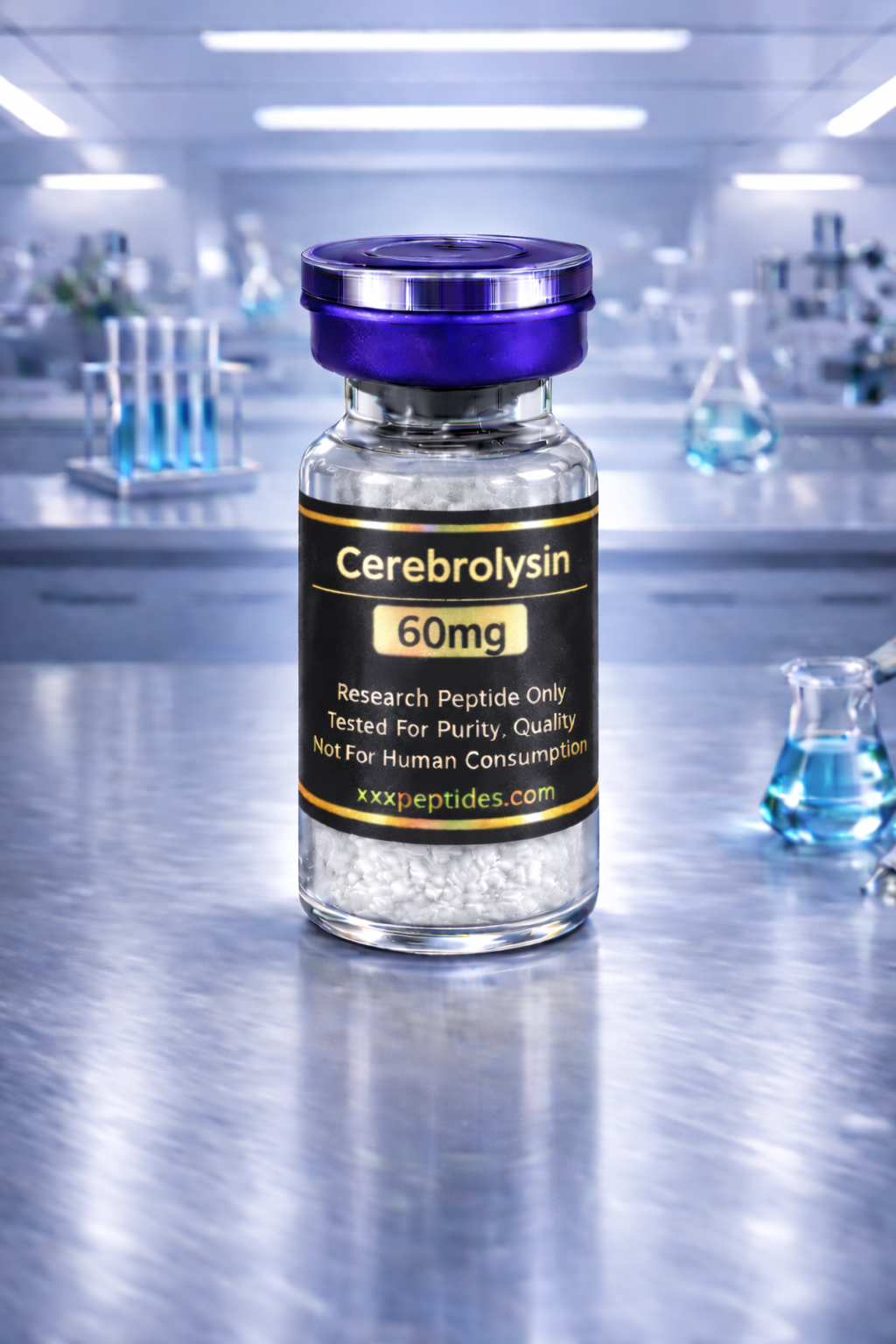
Cerebrolysin Porcine-Derived Peptide Fraction Research Compound | Lab Use Only
Cerebrolysin Porcine-Derived Peptide Fraction Research Compound | Lab Use Only
Couldn't load pickup availability
Porcine-Derived Peptide Fraction Research Compound
Not a single molecule. A mixture. That's the first thing to understand about Cerebrolysin.
Cerebrolysin is a proteolytic peptide fraction. It comes from porcine brain proteins — purified pig brain tissue, broken down by enzymatic processing. The result is a mixture of low-molecular-weight peptides and free amino acids. Because it's a mixture and not a single synthetic compound, it doesn't have one fixed molecular formula, one IUPAC name, or one exact molecular weight. That's normal for biologically derived peptide fractions. It gets characterized by ranges and batch specs instead.
One important thing upfront: Cerebrolysin is not FDA approved. It is not registered for sale or distribution in the United States. What's on this page is educational and research context only. Nothing here is medical guidance.
Lab only. Not for humans. Not for animals. Period.
Classification and Source
Material type: Proteolytic peptide fraction (biological extract)
Source: Purified porcine brain proteins
Standardization: Process controls and batch specifications, described in terms of nitrogen content rather than a single chemical identity
Molecular Weight Profile
Cerebrolysin contains a distribution of peptide fragments, not one compound. The molecular weight range reported in literature:
Peptide fraction: predominantly under 10 kDa
Smaller peptide majority: enriched in peptides under 5 kDa
Composition
Published descriptions vary by source. General reported ranges:
Low-molecular-weight peptides: around 15 to 30%
Free amino acids: around 70 to 85%
Base: aqueous solution
These are ranges and batch specifications. Not fixed chemical identity values.
Amino Acid Profile
Free amino acids commonly referenced in the formulation include glutamic acid, aspartic acid, lysine, arginine, glycine, histidine, leucine, isoleucine, valine, phenylalanine, tyrosine, proline, serine, threonine, and tryptophan. This list is not exhaustive and varies by batch.
How It Shows Up in Research Literature
Outside the U.S., Cerebrolysin gets discussed in research around neurotrophic-factor-like signaling concepts and neuronal recovery models. But it is not a single defined molecule. Study outcomes and reported effects vary by design and indication. This page does not make medical claims and does not provide clinical guidance.
Related Products
Researchers working on other neuropeptide signaling compounds may also find our Pinealon 10mg EDR tripeptide neuropeptide research compound worth looking at.
Regulatory Status
United States: Not FDA approved. Not registered for sale or distribution in the U.S.
International: Regulated differently across countries. May be marketed as a prescription medication in certain regions. Local laws apply.
Not a supplement. Not a drug for U.S. use. Read the terms before ordering.
Safety Information
Keep away from kids. Proper lab training and equipment required. Limited safety data exists outside controlled settings. Do not consume it. Buying means you accept full responsibility for safe handling and agree to our indemnification terms.