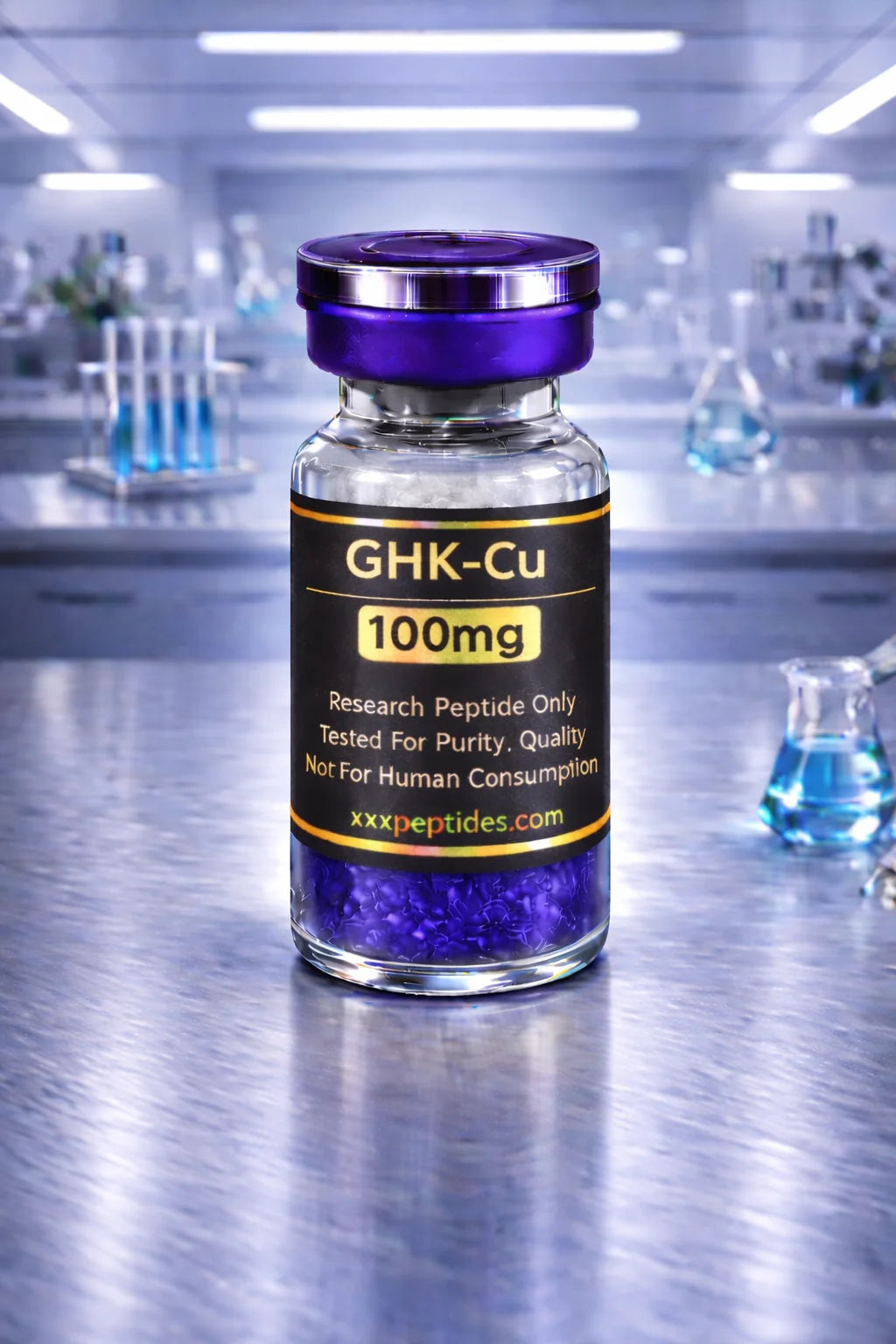
GHK-Cu 50mg / 100mg Research Peptide Vial
GHK-Cu 50mg / 100mg Research Peptide Vial
Couldn't load pickup availability
GHK-Cu 50mg and 100mg: A Copper Bound Tripeptide
GHK Cu is small. Just three amino acids, glycine, histidine, and lysine, bound to a copper ion. Researchers found it naturally in human plasma back in 1973. It also shows up in saliva and urine. Despite being so small, it's tied to thousands of gene expression studies.
Research use only. Strictly for labs. Not for people, not for animals.
Quick Facts
Name: GHK-Cu
Sequence: Gly-His-Lys, bound to Cu2+
Formula: C14H24CuN6O4
Weight: about 403.9 g/mol
CAS number: 49557-75-7
Look: Usually supplied as an acetate salt, white to off white powder
Why Researchers Use It
Glycine helps bind the copper. Lysine interacts with cell receptors at the right pH. That combination lets GHK Cu move copper in and out of cells, at least in lab models. Its small size also means it moves through extracellular space fast and reaches cellular receptors easily.
What Labs Study It For
Researchers look at GHK Cu in work covering:
Copper and peptide metal interaction
Extracellular matrix remodeling
Gene expression modulation
Collagen and tissue repair signaling, in vitro
Antioxidant and redox pathway behavior
Some labs also pair GHK Cu with Vilon when comparing different bioregulator peptides side by side in tissue and signaling research.
Regulatory Status
The FDA hasn't approved GHK Cu for treating or preventing anything. It's sold strictly for lab research.
Legal and Safety Info
Not a supplement, just a raw research compound. Keep away from kids. Long term safety data is limited, so only trained lab personnel should handle this.
Buying this means agreeing to use it legally, for research only.